Fun Ways to Practice Letter Sounds at Home: 25 Easy Activities

Discover 25 fun ways to practice letter sounds at home with simple games, songs, picture cards, and everyday activities that help children build early phonics skills.
Fun Ways to Practice Letter Sounds at Home: 25 Easy Activities
Learning letter sounds is one of the first steps toward reading. When children understand that letters represent sounds, they begin to connect spoken words with written language. This skill helps them recognize words, sound out simple words, and develop confidence as early readers.
The good news is that children do not need long lessons or expensive learning materials to practice phonics. Parents can introduce letter sounds through everyday conversations, playful games, songs, picture cards, and activities around the home.
These fun ways to practice letter sounds at home are suitable for preschoolers, kindergarten children, and young learners who are beginning to read. Most activities take just 5–15 minutes and use materials you probably already have.
Whether your child is learning the sound of B in ball, M in moon, or S in sun, short and enjoyable practice sessions can help make learning more meaningful.
Worksheets & Activities
What Are Letter Sounds?
Letter sounds are the sounds we associate with individual letters. For example, the letter B commonly represents the /b/ sound, as heard at the beginning of ball. The letter M represents the /m/ sound in moon.
Children often learn letter names and letter sounds together, but they are not the same.
- Letter name: The name of the letter, such as the name “bee” for B.
- Letter sound: The sound the letter represents, such as /b/ in ball.
- Beginning sound: The first sound heard in a word, such as /s/ in sun.
Some letters have more than one sound depending on the word. For example, C has a /k/ sound in cat and an /s/ sound in city. Beginners can start with common, easy-to-hear sounds before exploring these variations.
Why Are Letter Sounds Important for Early Reading?
Learning letter sounds helps children understand how written words work. Instead of trying to memorize every word, they begin to use sounds to read unfamiliar words.
Practicing letter sounds can help children:
- Recognize the relationship between letters and sounds.
- Hear the first sounds in familiar words.
- Develop phonemic awareness, which is the ability to notice and work with individual sounds in spoken words.
- Begin blending sounds to read simple words.
- Build confidence with early reading and spelling.
- Prepare for phonics lessons in preschool and kindergarten.
Letter sounds are only one part of learning to read. Children also benefit from listening to stories, talking about pictures, learning new words, and enjoying books with an adult.
When Should Children Start Learning Letter Sounds?
Many children begin exploring letters and their sounds during the preschool years, often between ages 3 and 5. However, children develop at different rates, so there is no single age when every child should know all the sounds.
You can introduce letter sounds naturally when your child shows interest in books, signs, names, or the alphabet.
For younger children, start with listening games and familiar words. Older preschoolers and kindergarten children may be ready to connect sounds with printed letters and blend simple sounds together.
A helpful rule: Keep activities short, positive, and appropriate for your child's attention span. Five enjoyable minutes can be more useful than a long session that leaves your child frustrated.
25 Fun Ways to Practice Letter Sounds at Home
You do not need a classroom, a collection of expensive toys, or complicated worksheets to help your child learn phonics. The activities below turn everyday moments into opportunities to listen, speak, play, and learn.
This first section covers activities 1–10. The remaining activities will include more sound games, creative practice ideas, and simple ways to build a regular home phonics routine.
1. Play the Letter Sound Hunt
A letter sound hunt is an easy way to connect sounds with objects children already know.
What you need:
- A letter card, such as S
- A few familiar household objects
- A small basket, if desired
How to play:
- Choose one letter sound, such as /s/.
- Say the sound clearly: “Today, we are listening for /s/.”
- Ask your child to look around for objects that begin with that sound.
- Help them find items such as a sock, spoon, or soft toy.
- Say each word slowly and emphasize its first sound.
For example, you might say, “Ssssock starts with /s/. Can you hear it?”
Do not worry if your child finds only one or two objects. The purpose is to listen carefully and make connections, not to collect the largest number of items.
Learning tip: Start with sounds that are easy to hear at the beginning of words, such as /m/, /s/, /f/, and /n/.
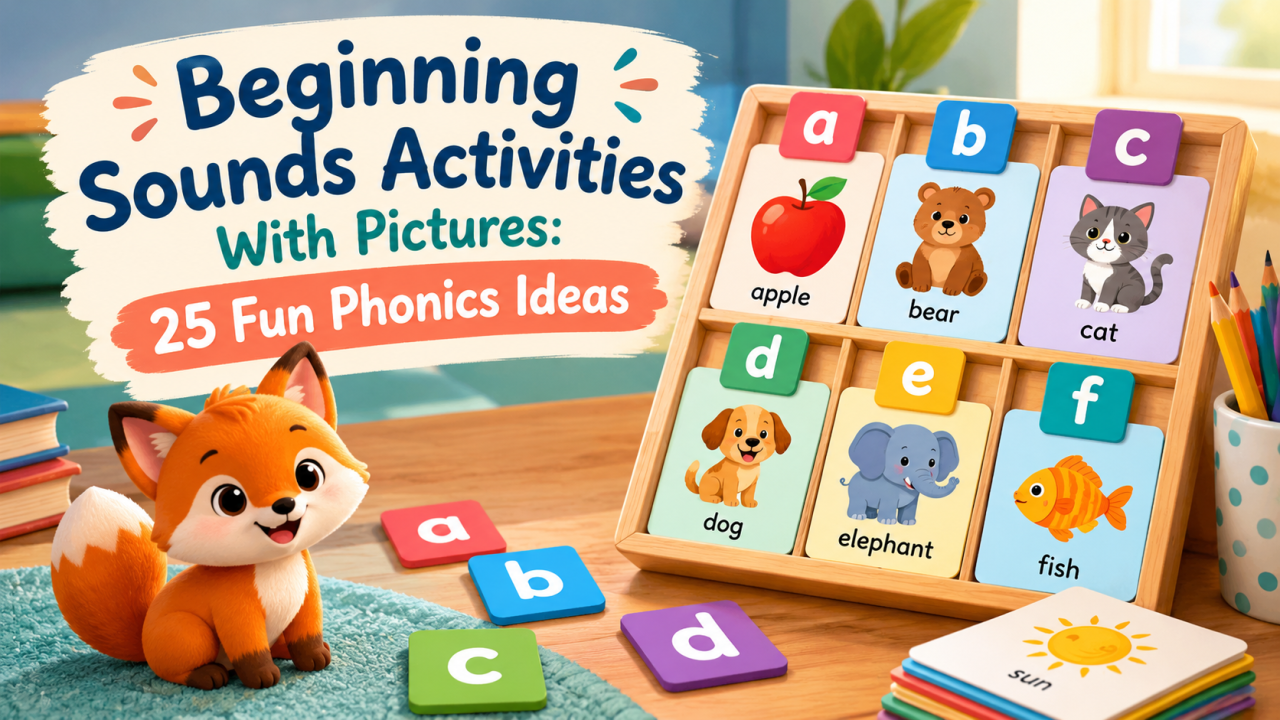
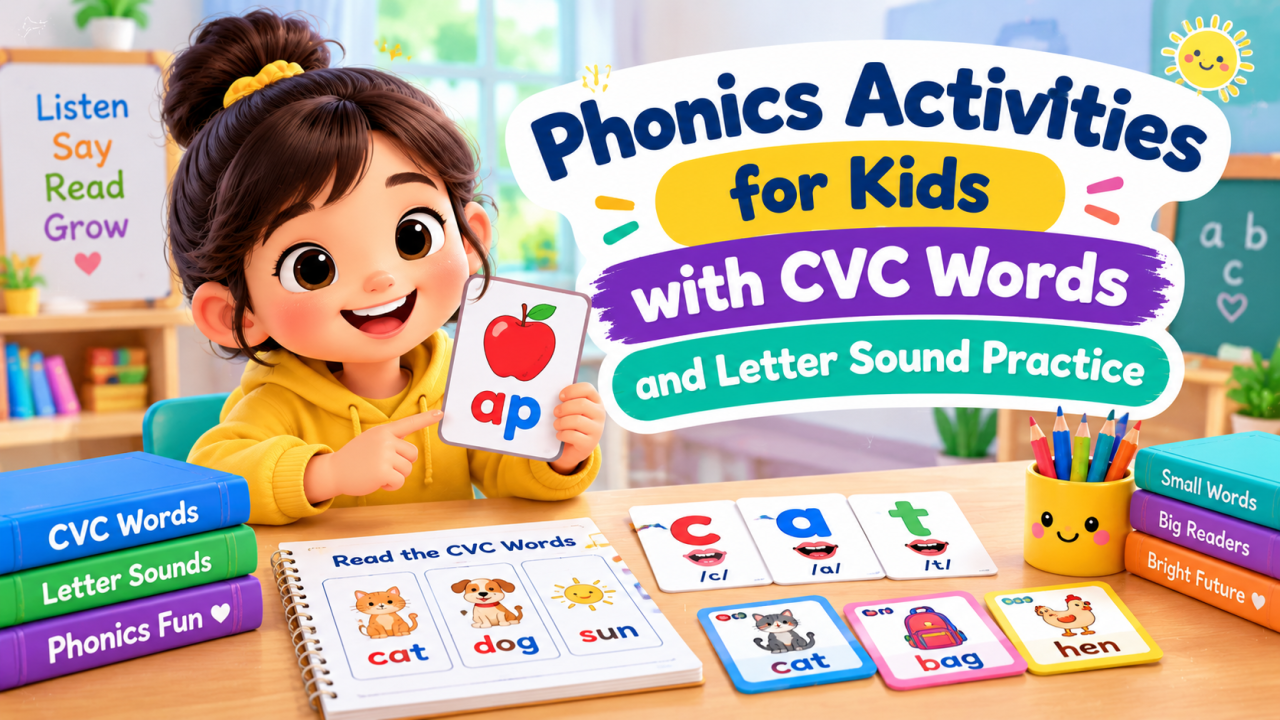
2. Use Alphabet Picture Cards
Picture cards make abstract letter sounds easier for young children to understand.
You can make your own cards using paper, crayons, magazine pictures, or simple drawings. Each card should show one letter and a familiar picture.
For example:
| Letter | Picture | Beginning sound |
|---|---|---|
| M | Moon | /m/ |
| S | Sun | /s/ |
| B | Ball | /b/ |
| F | Fish | /f/ |
| T | Turtle | /t/ |
Show your child a card and say the letter sound. Then name the picture together.
Try asking, “What sound do you hear at the beginning of moon?”
If your child is unsure, model the answer: “Moon starts with /m/. Let's say /m/ together.”
Keep the number of cards small at first. Three to five cards are enough for a short practice session.
3. Sing Letter Sound Songs
Music and rhythm can make repeated practice enjoyable. Simple songs also give children opportunities to hear sounds many times without feeling as though they are taking a test.
Choose a familiar alphabet tune and adapt it to focus on letter sounds. You can also create a short chant.
For example:
“B says /b/, /b/, /b/, B says /b/ in ball!”
Repeat the pattern with other letters and familiar words.
You can clap, tap your knees, or march gently while singing. Encourage your child to join in when ready, but do not insist that they pronounce every sound perfectly.
Why it works: Repetition, rhythm, and spoken language provide several ways for children to engage with the same sound.
4. Try the Sound Basket Game
This activity combines hands-on play with listening skills.
What you need:
- A basket or box
- Three to six safe, familiar objects
- One target letter sound
Place objects in the basket that begin with the same sound. For the /b/ sound, you might use a ball, a book, and a toy bus.
Take out one object at a time.
Ask:
- “What is this?”
- “What sound do you hear first?”
- “Can you say the word slowly with me?”
If you include an object that begins with a different sound, ask your child to identify which item does not belong.
For example, a ball, a book, and a spoon create a simple listening challenge. The spoon begins with /s/, while the other two begin with /b/.
For beginners, use objects with clear beginning sounds. Avoid making the first rounds too difficult.
5. Practice Letter Sounds in Front of a Mirror
Children sometimes enjoy watching their mouths move while speaking. A mirror can help them notice how different sounds are formed.
Stand with your child in front of a mirror and practice a few sounds together.
For example:
- /m/: Close your lips and make a gentle humming sound.
- /f/: Place your upper teeth lightly against your lower lip and let air flow.
- /s/: Keep your teeth close together and let air pass through.
Explain what you are doing in simple language. Then ask your child to copy you.
Some sounds, such as /b/, /p/, and /t/, are quick sounds rather than long sounds. Model them briefly instead of adding an extra vowel. For example, say /b/, not “buh,” when teaching the sound in ball.
Keep the activity playful. You can make funny faces, take turns copying each other, and practice only a few sounds at a time.
6. Read a Picture Book and Listen for Sounds
Storytime is an excellent opportunity to practice letter sounds without introducing a separate lesson.
Choose a picture book with familiar objects and clear illustrations. Before reading, select one sound to listen for.
For example, if you choose /m/, invite your child to notice words such as moon, mouse, or milk when they appear.
During the story:
- Read naturally and enjoy the book together.
- Pause occasionally when a word begins with the target sound.
- Say the word clearly.
- Ask your child to repeat it or identify the first sound.
- Continue reading without interrupting the story too often.
You can also revisit the pictures after reading and ask your child to find objects that begin with the target sound.
This approach connects phonics with vocabulary, listening, and a positive reading experience.
7. Make Letter Sounds With Play Dough
Play dough gives children a chance to explore letters through touch and movement.
What you need:
- Child-safe play dough
- A clean surface
- Letter cards or simple letter models
Ask your child to roll the dough into long pieces and shape a familiar letter. Start with simple uppercase letters, then introduce lowercase letters as your child becomes comfortable.
Once the letter is ready, say its sound and think of a word that begins with it.
For example:
- Shape M and say /m/ for moon.
- Shape S and say /s/ for sun.
- Shape T and say /t/ for top.
You can also place a small picture beside the play-dough letter to connect the symbol with its sound.
Remember that forming a letter and identifying its sound are two different skills. Support both, but do not expect your child to master them at the same time.
8. Play “I Spy” With Beginning Sounds
The classic “I Spy” game becomes a phonics activity when you give a sound-based clue.
Instead of saying, “I spy something red,” try:
“I spy something that starts with /b/.”
Your child can look around and suggest objects such as a bag, book, or bottle.
If your child needs help, give an additional clue: “You can open it and read the pages.”
When your child guesses correctly, repeat the word and emphasize its first sound.
You can take turns giving clues. Let your child choose an object and help them think of the sound that begins its name.
For younger children, point to two or three possible objects rather than asking them to search the whole room. This reduces frustration and keeps the game moving.
9. Match Letters to Everyday Objects
This activity helps children understand that letters and sounds are part of daily life, not just books or worksheets.
Write a few large letters on separate pieces of paper. Place them on a table or the floor.
Choose safe objects that begin with the corresponding sounds. For example:
- B — ball
- C — cup
- M — mug
- S — sock
Ask your child to place each object beside the matching letter.
Before placing it, say the object's name together and listen for the first sound.
For example, “Cup starts with /k/. Which letter can represent that sound in this word?”
Be aware that some letters can represent different sounds. For a beginner's matching game, choose words with straightforward sound-letter relationships and explain that spelling patterns become more varied as children learn.
10. Use Flashcards for a Quick Sound Challenge
Flashcards are useful when you want a short activity before breakfast, after school, or during a quiet moment at home.
Write one letter on each card. Begin with a small set of letters your child has already encountered.
Show one card at a time and invite your child to say its most common sound. If they know the sound, ask them to name a word that begins with it.
For example:
- Show M: “What sound?”
- Child: “/m/.”
- Ask: “Can you think of a word that starts with /m/?”
- Child: “Moon!”
If your child struggles, provide the sound and a familiar example, then invite them to try again later.
You can make flashcards more playful by:
- Letting your child draw a picture on the back.
- Placing cards around the room for a mini hunt.
- Asking your child to find a card after hearing its sound.
- Reviewing familiar cards before introducing new ones.
Avoid rushing through a large stack. A few cards practiced carefully are often more useful than many cards guessed at random.
How to Make Letter Sound Practice Easier for Beginners
When children first learn phonics, they need plenty of opportunities to hear sounds clearly and connect them with familiar words.
Use these simple strategies:
- Start small: Introduce only a few sounds at a time.
- Use familiar words: Choose objects your child can name easily.
- Model the sound: Say it clearly and let your child listen before repeating.
- Practice regularly: Short sessions throughout the week help build familiarity.
- Celebrate effort: Praise careful listening, attempts, and progress.
- Avoid unnecessary pressure: Correct mistakes gently and try again later.
A child does not need to learn every letter sound in one week. The goal is to build strong foundations gradually while keeping learning enjoyable.
In the next part, we will cover 15 more playful letter sound activities, ideas for different age groups, common mistakes to avoid, and a simple weekly practice plan.
15 More Fun Ways to Practice Letter Sounds at Home
Once your child is comfortable with a few basic letter sounds, introduce new games to keep learning interesting. These activities encourage children to listen carefully, recognize sounds, and connect letters with familiar words.
You can choose one activity each day or repeat your child's favorites throughout the week. There is no need to complete all the activities at once.
11. Play the Beginning Sound Sorting Game
Sorting games help children compare sounds and notice which words begin alike.
What you need:
- Two or three bowls, baskets, or paper plates
- Picture cards or small household objects
- Letter cards for the sounds you want to practice
Choose two sounds, such as /m/ and /s/. Place an M card beside one bowl and an S card beside another.
Give your child pictures or objects such as a mug, moon picture, sock, spoon, and sun picture.
Ask your child to name each item, listen to its first sound, and place it in the correct group.
For example:
| /m/ sound | /s/ sound |
|---|---|
| Moon | Sun |
| Mug | Mug? No—listen again! |
| Mouse | Sock |
| Milk | Spoon |
Use only words that genuinely begin with the target sound. If an item is confusing, replace it with a clearer example.
Make it easier: Start with two pictures at a time.
Make it harder: Add a third sound after your child understands the first two groups.
12. Go on a Sound Walk
A sound walk turns an ordinary walk around your home, garden, or neighborhood into a phonics activity.
Choose a target sound before you begin. For example, you might listen for /b/.
As you walk, look for familiar things that begin with that sound, such as a ball, bird, bus, or bag.
Encourage your child to:
- Name the object.
- Say the word slowly.
- Listen to its first sound.
- Connect that sound with the letter B.
You can also do this indoors by walking from one room to another.
Avoid expecting every object to match your target sound. If you cannot find an example, use the opportunity to talk about a different sound you hear.
Learning tip: Ask your child to listen for sounds in words rather than simply looking for objects that contain a particular letter.
13. Make a Letter Sound Collage
A letter sound collage combines art with early phonics practice.
What you need:
- A large sheet of paper
- Crayons or child-safe glue
- Pictures cut from old magazines or printed picture cards
- A marker
Write a large letter in the middle of the page. Choose a letter your child is learning, such as F.
Help your child find or draw pictures of things that begin with /f/, such as a fish, fan, frog, or flower.
Stick the pictures around the letter and say each word together.
As you work, ask simple questions:
- “What is this picture?”
- “What sound do you hear first?”
- “Can you find another word that begins with the same sound?”
Display the finished collage where your child can see it. Revisit it during the week and invite your child to name the pictures again.
For younger children, prepare the pictures in advance and let them choose which ones to use.
14. Try the Missing Sound Game
This game encourages children to listen closely to words and identify their first sound.
Start with a familiar word such as sun. Say the word clearly, then repeat it while leaving out the beginning sound.
For example, say, “/s/ ... un. What sound is missing?”
Help your child hear that /s/ completes the word sun.
Try other simple words:
- /m/ ... at = mat
- /b/ ... us = bus
- /f/ ... an = fan
- /r/ ... ed = red
Use this activity only when your child has begun recognizing the individual sounds in spoken words. It may be challenging for children who are just starting.
If your child finds it difficult, say the full word and stretch the beginning sound slightly before trying again.
15. Use a Toy Car to Drive to the Right Letter
Turn letter recognition into a pretend driving game.
What you need:
- A toy car
- Paper letter cards
- A clear, safe floor space
Place three or four letter cards on the floor. Tell your child a sound, such as /m/, and ask them to drive the car to the letter M.
Once the car reaches the correct card, ask your child to name a word beginning with that sound.
You can reverse the game by showing a letter and asking your child to say its sound before moving the car.
Keep the number of letters small at first. Add more cards as your child becomes confident.
This activity works especially well for children who enjoy movement and pretend play.
16. Clap the Beginning Sound
Clapping gives children a physical way to participate in a listening activity.
Choose a few familiar words, such as sun, ball, moon, and fish.
Say each word clearly and ask your child to clap once when they hear the beginning sound you are practicing.
For example, if you are focusing on /s/, your child claps when hearing sun but not when hearing ball.
You can also clap whenever a word begins with a particular sound while reading a short story or singing a song.
Keep the rules simple. The purpose is to focus attention on speech sounds, not to test your child's speed.
Important distinction: Clapping once for a beginning sound is different from clapping syllables. Both activities can support listening skills, but they teach different things.
17. Make a Letter Sound Treasure Hunt
A treasure hunt adds excitement to letter sound practice.
Hide a few picture cards or safe household objects around one room. Choose a target sound, such as /t/, and give your child a clue.
For example: “Find something that begins with /t/.”
Your child might discover a toy train, a towel, or a toy tiger.
When an item is found, ask your child to say its name and identify the first sound. If you use a letter card as the treasure, ask them to think of an object that starts with that sound.
For younger children, hide the objects in easy-to-find places. For older children, use picture clues or let them find three items that begin with the same sound.
Always choose safe objects and supervise young children during the hunt.
18. Explore Letter Sounds With a Sensory Tray
Sensory play gives children an enjoyable way to explore letters while practicing their sounds.
What you need:
- A shallow tray
- A small amount of clean sand, flour, or another suitable material
- Letter cards
Write a letter on a card and place it beside the tray. Say the sound and model how to trace the letter in the material.
For example, trace S while saying /s/, then invite your child to try.
After tracing, ask your child to name a word beginning with that sound.
You can also hide large, safe letter tiles in a tray of paper strips and ask your child to find a letter after hearing its sound.
Choose materials appropriate for your child's age and supervise closely. Avoid small loose items with children who still put objects in their mouths, and keep sensory materials away from the eyes and mouth.
19. Play Letter Sound Bingo
Bingo is an easy group game for siblings, parents, or a small playdate.
What you need:
- Bingo cards with a few familiar letters
- Small paper markers or counters
- A list of letter sounds
Make a simple grid with four to six letters. Instead of calling out letter names, say their sounds.
For example, say /m/. Your child looks for M and covers it with a marker.
When a player covers a complete row, they can say “Bingo!”
For beginners, use three or four letters they already know. For children who are ready for more practice, include additional letters or use pictures and ask them to identify the beginning sound.
Remember that some sounds can be represented by more than one spelling pattern. For an introductory game, use clear, familiar examples.
20. Match Pictures to the Sound You Hear
This activity helps children move from simply naming pictures to listening for a particular sound.
Place three pictures in front of your child. For example, use a sun, a ball, and a sock.
Say a sound such as /s/ and ask, “Which picture begins with this sound?”
Your child points to the sun or sock.
Then ask them to name the chosen picture and repeat its beginning sound.
You can make the activity more challenging by including pictures with similar sounds, but avoid introducing too many confusing examples at once.
Try using picture pairs such as:
- Moon and mouse
- Fish and fan
- Ball and bus
- Cat and cup
For very young learners, begin with one correct picture and one clearly different picture.
21. Create a Letter Sound Memory Game
Memory games encourage children to pay attention to pictures and remember what they have seen.
Make pairs of cards that show the same picture or a letter and a matching picture. For example, one card might show M and another might show a moon.
Place the cards face down.
Players take turns turning over two cards. If they find a matching letter and picture, they name the letter, say its sound, and keep the pair.
If the cards do not match, turn them over again and let the next player have a turn.
For beginners, start with only three or four pairs. Add more as your child becomes comfortable.
The matching rule should be clear: the letter M can match a moon picture because moon begins with /m/.
22. Make a Letter Sound Craft
Craft activities can reinforce a sound through drawing, cutting, sticking, and talking.
Choose one letter and make a simple craft related to a word that begins with its sound.
For example:
- B for butterfly
- F for fish
- S for sun
- M for moon
Write the letter on the craft and say the sound together.
While your child decorates the picture, repeat the word naturally: “You are adding yellow rays to the sun. Sun begins with /s/.”
You do not need to complete a new craft every day. One carefully chosen craft can provide several opportunities to hear and practice the same sound.
Use child-safe materials, and handle scissors or small craft supplies according to your child's age and ability.
23. Play the Sound Detective Game
Invite your child to become a detective who solves sound clues.
Say a word and ask your child to identify its first sound. For example:
- “I am thinking of something that begins with /m/. It is an animal that says meow.” Answer: cat would not fit /m/, so the clue should be revised to a word beginning with /m/, such as mouse.
- “I am thinking of something that begins with /f/. It can swim and has fins.” Answer: fish.
- “I am thinking of something that begins with /b/. You can bounce it.” Answer: ball.
Give one clue at a time and allow your child to think before offering the answer.
You can reverse roles and let your child create clues for you. If the clue is too difficult, offer two possible answers.
This activity supports listening, vocabulary, and the ability to connect spoken words with beginning sounds.
24. Practice Sounds During Everyday Routines
You do not have to set aside a special time for every phonics activity. Everyday routines offer many chances to practice.
During breakfast: Talk about foods that begin with a target sound, such as /b/ in banana.
While getting dressed: Listen for /s/ in sock or /t/ in T-shirt.
During cleanup: Ask your child to find a book that begins with /b/ or a toy that begins with /c/ as in car.
At bedtime: Choose a letter sound and think of two words that begin with it.
Keep the conversation natural. If your child is tired or uninterested, continue the routine without turning it into a lesson.
Small moments of practice can reinforce sounds that your child has already learned.
25. Play a Letter Sound Review Challenge
A review game gives children a chance to use several skills they have practiced.
Choose five familiar letter cards and place them in front of your child. Say a sound and ask them to point to the matching letter.
Next, show a letter and ask them to say its sound.
Finally, name a familiar object and ask your child to identify its beginning sound.
For example:
- You say /m/. Your child points to M.
- You show S. Your child says /s/.
- You say fish. Your child identifies /f/ as the first sound.
Keep the challenge relaxed. If a sound is difficult, model it, practice together, and return to it later.
The goal is to notice what your child can do independently and which sounds need more practice—not to get every answer right.
Letter Sound Activities by Age Group
Children develop at different rates, so use age as a general guide rather than a strict rule. Choose activities based on your child's interest, listening skills, and familiarity with letters.
| Age or stage | Activities to try | Main focus |
|---|---|---|
| Around ages 2–3 | Sound songs, picture books, naming familiar objects | Listening and enjoying sounds |
| Around ages 3–4 | Sound hunts, object baskets, picture matching | Hearing beginning sounds |
| Around ages 4–5 | Letter cards, sorting games, sound bingo | Connecting letters with sounds |
| Around ages 5–6 | Sound detective games, simple blending, letter-sound review | Applying phonics to early reading |
These age ranges are flexible. Some children will be ready for letter cards early, while others will benefit from more listening and speaking games before connecting sounds to print.
For Toddlers
Keep activities playful and focused on spoken language. Name familiar objects, read picture books, sing songs, and draw attention to interesting sounds.
You do not need to expect a toddler to identify every letter or produce every sound accurately.
For Preschoolers
Use matching games, sound hunts, songs, and picture cards. Introduce a small group of letters and revisit them regularly.
Ask questions such as, “What sound starts sun?” Give your child time to answer, and model the sound when needed.
For Kindergarten Children
Practice letter-sound relationships more systematically. Mix familiar letter cards, beginning-sound games, and opportunities to blend sounds in simple words when your child is ready.
For example, you might help your child blend /s/ /a/ /t/ to read sat. Make sure you pronounce the sounds clearly without adding extra vowel sounds.
A Simple 7-Day Letter Sound Practice Plan
A routine can help parents fit phonics into busy days without making learning feel like homework.
Each session can last about 5–10 minutes. Repeat the plan with different letters when your child is ready.
| Day | Activity | Example |
|---|---|---|
| Monday | Picture cards | Practice M, S, and F |
| Tuesday | Sound hunt | Find objects beginning with /m/ |
| Wednesday | Song and movement | Sing a letter sound chant |
| Thursday | Sorting game | Sort pictures by /s/ and /b/ |
| Friday | Storytime | Listen for words beginning with /f/ |
| Saturday | Play-based review | Try sound bingo or a treasure hunt |
| Sunday | Gentle recap | Review familiar sounds through conversation |
You can change the activities to match your child's interests. If your child particularly enjoys toy cars, use them in a matching game. If they prefer drawing, create a letter sound collage.
Consistency matters more than completing a fixed schedule. If a day gets busy, simply return to the activity when you have time.
Common Mistakes to Avoid When Teaching Letter Sounds
Parents do not need to be trained teachers to support early phonics, but a few simple adjustments can make practice clearer and more enjoyable.
1. Teaching Too Many Letters at Once
Introducing a large group of letters may make it harder for a beginner to remember each sound.
Start with a few letters and review them before adding more. Adjust the pace based on your child's confidence.
2. Saying Letter Names Instead of Sounds
Letter names and letter sounds are related but different. If you show M and ask for its sound, the goal is /m/, not the letter's name.
It is fine to teach both, but make the purpose of each activity clear.
3. Adding Extra Vowel Sounds
When teaching individual consonant sounds, avoid adding an extra “uh” sound.
For example, model /m/ rather than “muh” and /s/ rather than “suh.” Extra vowels can make blending sounds into words more difficult.
Some consonants are naturally harder to pronounce in isolation, so demonstrate them clearly and patiently.
4. Turning Every Game Into a Test
Repeatedly asking a child to prove what they know can reduce enjoyment.
Instead, model the answer, invite your child to join in, and offer praise for effort. A game should still feel like a game.
5. Correcting Every Mistake Immediately
If your child confuses two sounds, respond calmly.
You might say, “That word starts with /f/. Listen: fffish. Let's try it together.”
Then move on or revisit the sound later. Children need opportunities to hear correct examples without feeling embarrassed.
6. Practicing Only With Worksheets
Worksheets can be useful, but they should not be the only way a child encounters phonics.
Combine printed activities with conversation, picture books, movement, toys, and real objects. These varied experiences help children connect sounds with language they use every day.
7. Expecting Every Child to Learn at the Same Speed
Some children quickly remember many letter sounds. Others need more repetition or benefit from a different activity.
Focus on gradual progress rather than comparing your child with siblings, classmates, or age-based checklists.
If your child persistently struggles to hear sounds, learn letter-sound relationships, or make progress despite regular support, consider discussing your concerns with their teacher or a qualified reading specialist. Early guidance can help identify useful next steps.
How to Know If Your Child Is Making Progress
Progress may appear in small ways before your child can name every letter sound.
Look for signs such as:
- Recognizing a few familiar letter sounds.
- Naming objects that begin with a practiced sound.
- Matching simple pictures to their beginning sounds.
- Noticing sounds in books, songs, or everyday conversations.
- Remembering previously practiced sounds after a break.
- Beginning to blend sounds into simple words when ready.
You can keep a simple record of the sounds your child recognizes confidently, the sounds they recognize with help, and the sounds that need more practice.
Avoid judging progress by one session. A child may answer correctly one day and need support the next. Continue offering positive, repeated opportunities to practice.
Helpful Resources for Practicing Letter Sounds
Alongside home games, parents can use simple learning resources to reinforce phonics.
- Alphabet picture cards: Useful for matching letters, pictures, and beginning sounds.
- Picture books: Provide meaningful examples of spoken words and sounds.
- Printable phonics worksheets: Offer extra practice with letter recognition and beginning sounds.
- Alphabet charts: Help children revisit familiar letters during short learning sessions.
- Early reading books: Give children opportunities to connect sounds with simple written words.
Choose resources that match your child's current skills. A worksheet should reinforce something the child has been introduced to, not replace clear modeling and enjoyable practice.
For additional guidance, parents can explore phonics and early literacy resources from the National Institute for Literacy and the Reading Rockets website.
Final Tips for Parents
Helping children learn letter sounds at home does not need to be complicated. A few picture cards, familiar objects, a storybook, and some time to play can provide useful practice.
Remember these simple principles:
- Keep practice short and enjoyable.
- Focus on a small number of sounds at a time.
- Connect sounds with familiar words and objects.
- Model correct sounds clearly.
- Repeat activities your child enjoys.
- Celebrate progress without expecting perfection.
Most importantly, make room for conversation, stories, songs, and play. These experiences help children build the listening and language skills that support early reading.
In the next part, we will bring the article together with a conclusion, key takeaways, a practical call to action, 10 SEO-friendly FAQs, FAQ schema, and a final publishing checklist.
Conclusion: Make Letter Sound Practice Fun and Meaningful
Learning letter sounds is an important step toward becoming a confident reader. With simple games, songs, picture cards, storybooks, and everyday objects, parents can help children develop early phonics skills at home.
These fun ways to practice letter sounds at home show that learning does not have to involve long lessons or expensive materials. Activities such as sound hunts, letter matching, sensory play, and picture sorting can turn ordinary moments into enjoyable learning opportunities.
Start with a few familiar sounds, repeat activities your child enjoys, and gradually introduce new letters as their confidence grows. Remember that every child learns at a different pace, so patience and encouragement are just as important as practice.
The goal is not to memorize every letter sound in a single week. It is to help children listen carefully, recognize sounds, connect letters with spoken words, and develop a positive attitude toward reading.
Make phonics part of your daily routine, celebrate small achievements, and enjoy learning together. A few playful minutes each day can give your child valuable opportunities to build a strong foundation for reading.
Key Takeaways
- Start with simple sounds: Introduce a few familiar letter sounds before adding more.
- Use everyday objects: Items such as balls, books, socks, and spoons make useful phonics examples.
- Try playful activities: Sound hunts, alphabet songs, picture cards, sorting games, and letter sound bingo make practice enjoyable.
- Keep sessions short: Five to ten minutes of focused practice is a practical starting point for many young children.
- Teach letter names and sounds separately: Help children understand both what a letter is called and the sound it commonly represents.
- Model sounds clearly: Avoid adding extra vowel sounds when teaching individual consonants.
- Read together: Picture books offer natural opportunities to notice and discuss beginning sounds.
- Repeat familiar activities: Regular, positive practice helps reinforce previously introduced sounds.
- Adjust to your child's needs: Choose activities based on their interest, age, and current skills.
- Celebrate progress: Encourage effort and curiosity instead of expecting immediate perfection.
Help Your Child Build Strong Early Reading Skills
Ready to make phonics more enjoyable at home? Choose one activity from this guide and try it with your child today. Start with a familiar letter, find a few objects that begin with its sound, and turn the practice into a fun five-minute game.
Explore more educational activities, printable worksheets, alphabet games, and early learning resources on our website to support your child's reading journey.
Start small, practice regularly, and celebrate every new sound your child learns!
Frequently Asked Questions
1. What are some fun ways to practice letter sounds at home?
Fun ways to practice letter sounds at home include alphabet songs, sound hunts, picture card games, letter sound bingo, object sorting, sensory trays, and reading picture books together. Choose short activities that match your child's age and interests.
2. At what age should children start learning letter sounds?
Many children begin exploring letter sounds between ages 3 and 5, although development varies. Younger children can start by listening to sounds in songs and familiar words, while older preschoolers may begin matching sounds with printed letters.
3. How can I teach letter sounds to my preschooler?
Start with a few familiar letters and connect each sound with a common word or object. Use picture cards, songs, household objects, and simple matching games. Model the sound clearly and give your child plenty of opportunities to practice without pressure.
4. How long should I practice letter sounds with my child each day?
A short session of around 5–10 minutes is a practical starting point for many young children. Adjust the length to your child's attention span and interest. Short, enjoyable sessions are often easier to maintain than lengthy lessons.
5. What is the difference between letter names and letter sounds?
A letter name is what we call a letter, such as “bee” for B. A letter sound is the sound the letter represents in a word, such as /b/ in ball. Children benefit from learning both, but they should understand the difference.
6. Which letter sounds should I teach first?
Begin with a small group of familiar sounds that are easy to hear in simple words. Sounds such as /m/, /s/, /f/, and /n/ can be useful starting points. Introduce additional sounds gradually and choose examples that make the sound-letter connection clear.
7. Can I teach letter sounds without worksheets?
Yes. You can practice letter sounds using everyday objects, picture books, songs, toys, pretend play, and household treasure hunts. Worksheets can provide additional practice, but they are not essential for every activity.
8. How can I help my child remember letter sounds?
Use frequent, brief practice sessions and revisit familiar sounds through different activities. Match letters with pictures, repeat words during storytime, and look for objects that begin with the target sound. Gentle repetition can help reinforce learning.
9. What should I do if my child struggles to recognize letter sounds?
Return to a few familiar sounds, model each one clearly, and use simple words and pictures. Avoid rushing or comparing your child with others. If difficulties continue despite regular support, speak with your child's teacher or a qualified reading specialist for guidance.
10. Are letter sound games helpful for early reading?
Yes. Letter sound games can help children connect written letters with spoken sounds, recognize beginning sounds, and develop skills that support decoding simple words. They work best alongside conversation, story reading, vocabulary development, and other early literacy experiences.